
The runways of recent seasons have brought natural and synthetic leather and suede back to center stage, with new textures, unexpected color palettes, and sophisticated surface work. A return that is not only aesthetic: it reflects the search for materials capable of responding together to the needs of style, customization and industrial production.
In this scenario, CO₂ laser technology confirms itself as one of the most versatile tools available to fashion and accessory manufacturers. Its ability to interact with the leather surface in different and controlled ways makes it suitable for a wide range of aesthetic effects and industrial applications.
Let’s take a closer look at what can be achieved with lasers on these materials and what the benefits are for those working in the fashion and accessories industry.
Leather and suede: one material, many behaviors
Leather is an organic material with a complex and variable structure: thickness, surface finish, tanning, and moisture content directly influence the response to laser radiation. Chamois, both natural and synthetic, in turn has specific characteristics, with a velvety surface and shorter fibers that react particularly to the heat of the laser beam.
The CO₂ laser, with a wavelength of 10.6 μm, is effectively absorbed by these organic materials. Its modularity, or the ability to vary power by up to 1% in real time, allows you to move from gentle to deeper surface processing, calibrating each intervention based on the desired result. It is this precision that makes the laser a technical and creative tool at the same time.
The main laser processes on leather
The laser does not perform a single operation: depending on the processing parameters, power, speed, resolution and type of optical head, very different effects can be achieved.
Engraving and texturing
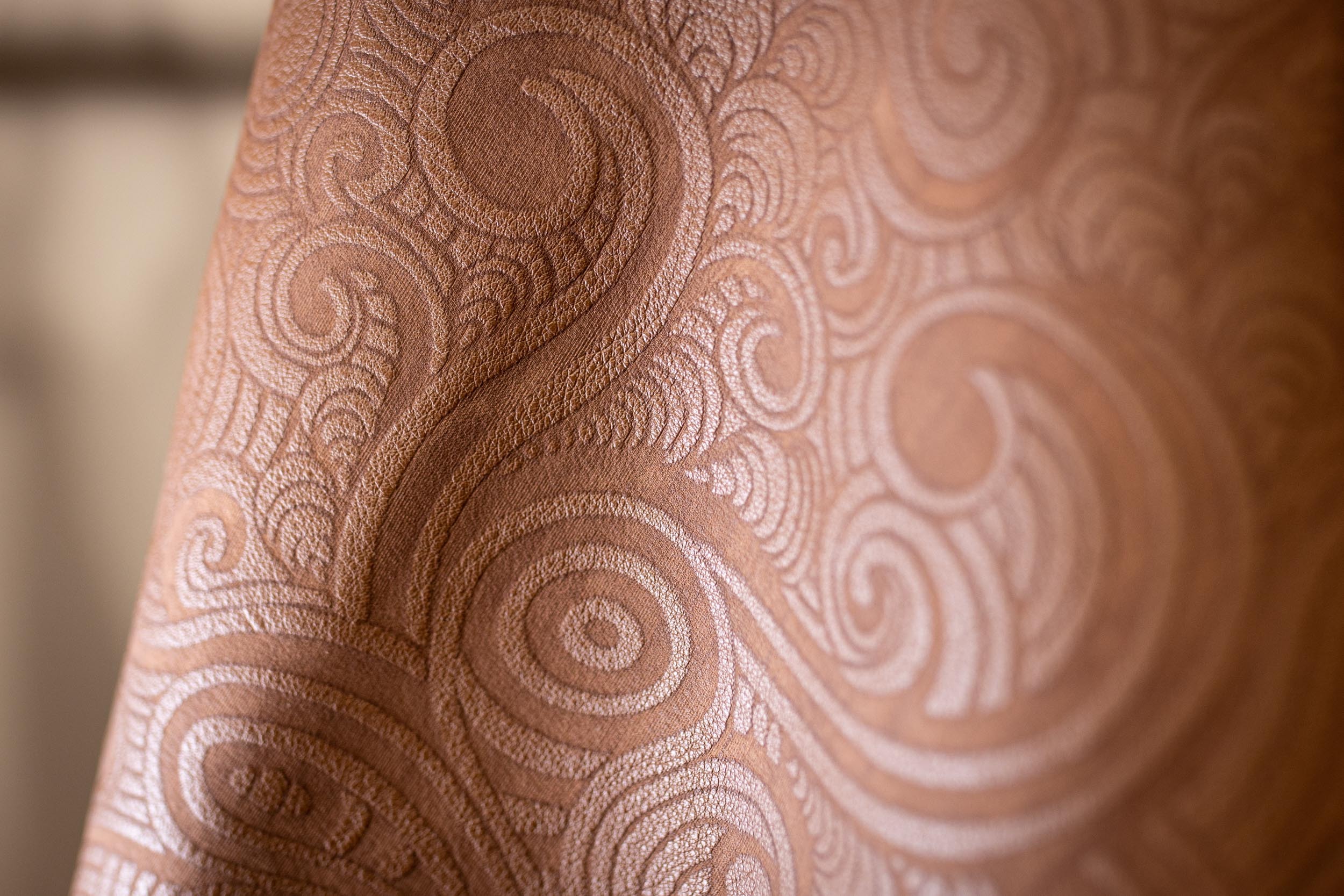
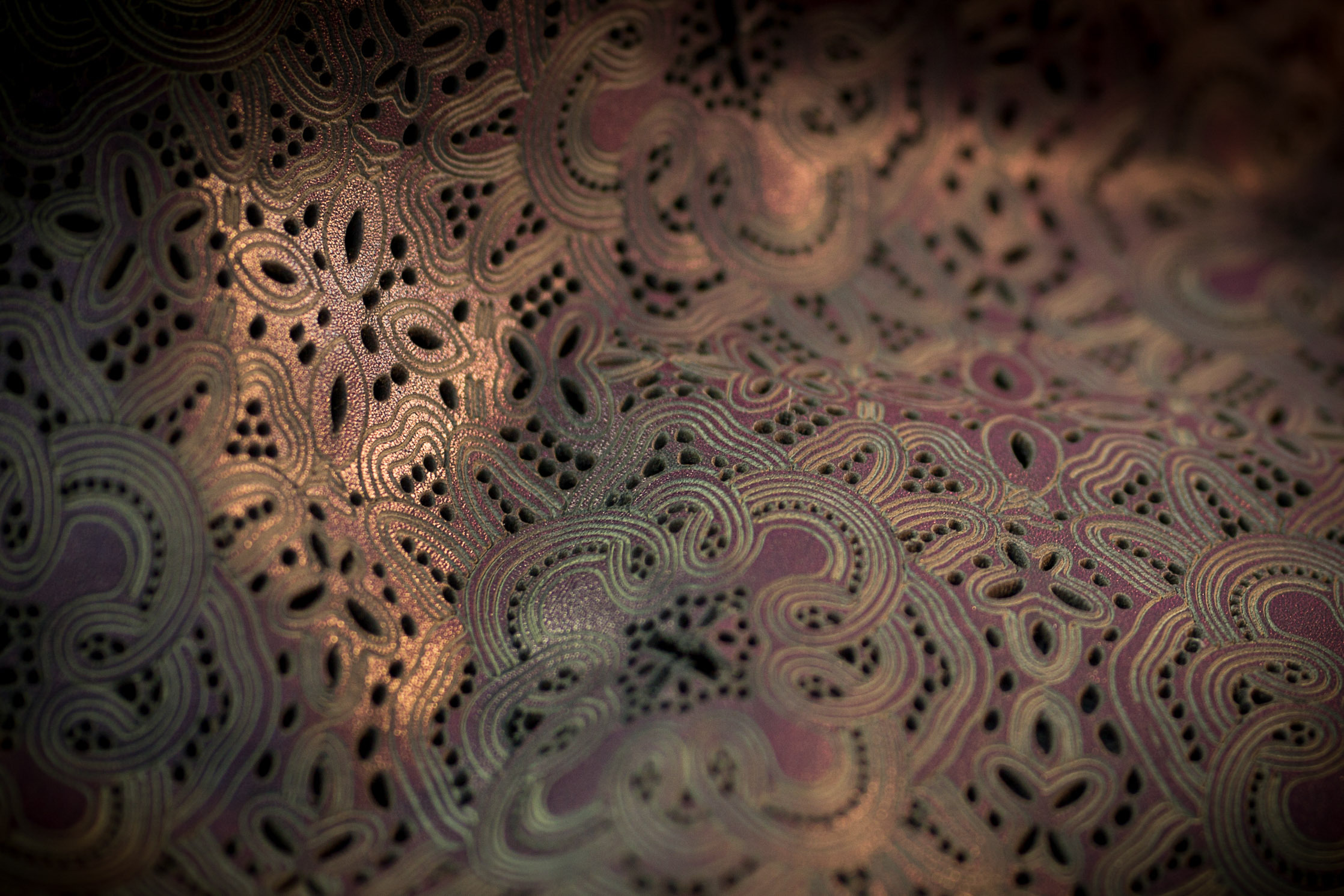
Laser engraving removes material to a controlled depth, creating reliefs, grooves, and decorative patterns with millimeter-level precision that no traditional mechanical process can replicate as consistently. On leather, this translates into geometric patterns, three-dimensional textures, simulated prints, or vintage effects, all of which can be reproduced in identical series, piece by piece.
For chamois, etching produces a natural color contrast between the processed and intact areas, enhancing the depth of the material without the need for additional dyes or treatments.
Marking and customization
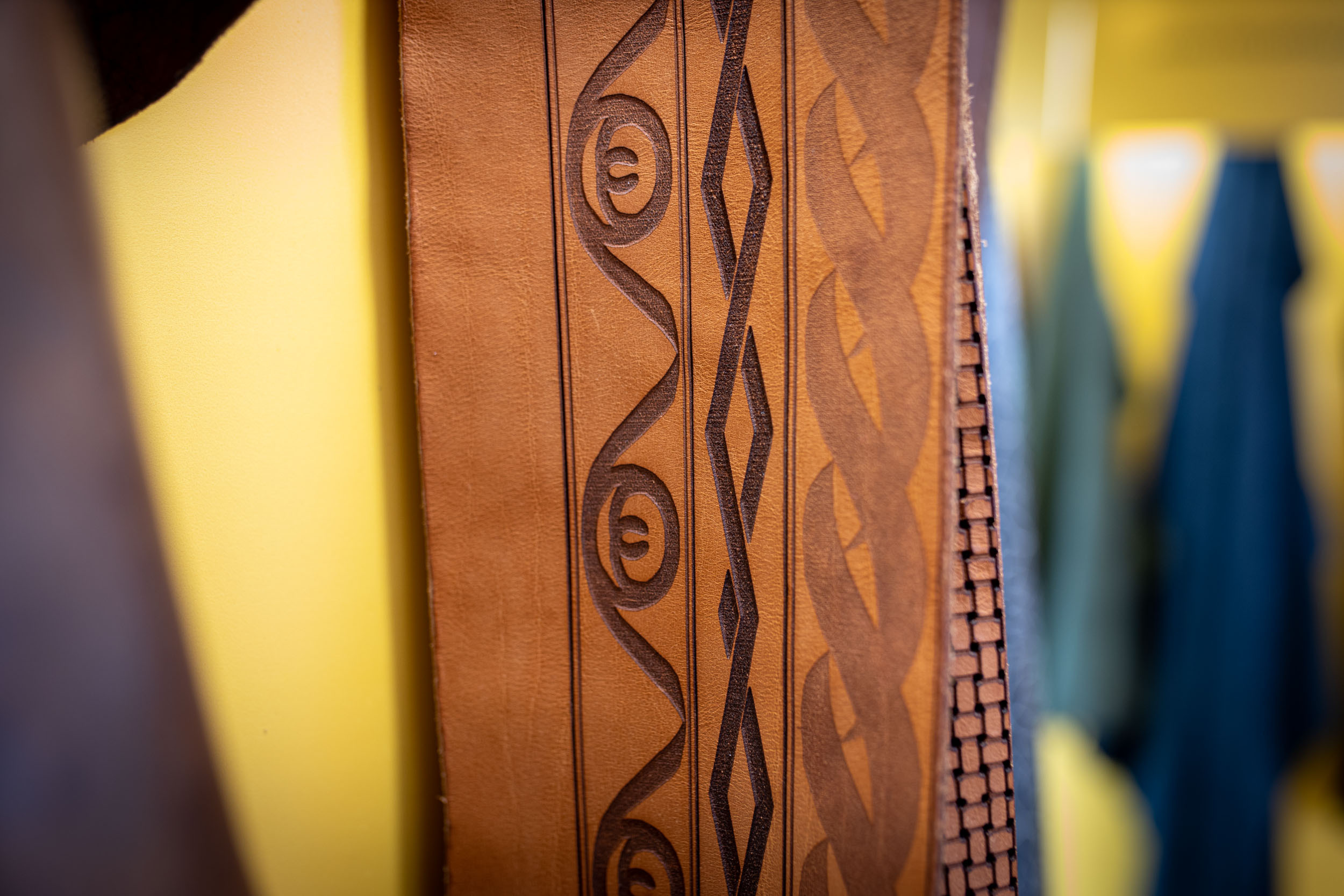
Laser marking allows you to apply logos, serial numbers, source labels and any graphic element to leather with maximum clarity. It is an increasingly sought-after process in the luxury accessories sector, where traceability and anti-counterfeiting are concrete production priorities, as well as aesthetic ones.
Unlike hot stamping or screen printing, laser marking does not require physical tools to replace, does not use inks, and does not put pressure on the material. The result is permanent, streak-free and uniform even over large production volumes.
Shaped cutting and laser die cutting
Laser cutting on leather offers clean edges, without fraying or material deformation. It is particularly suitable for complex shapes, small details and profiles that would require multiple steps with traditional methods. Laser die-cutting, as an alternative or to complement mechanical die-cutting, allows for reduced setup times and the management of small batches or product variants without additional costs.
On synthetic suede, the laser seals the edge during cutting, eliminating the risk of fraying and making an additional finishing step unnecessary.
Micro-perforation: breathability and design
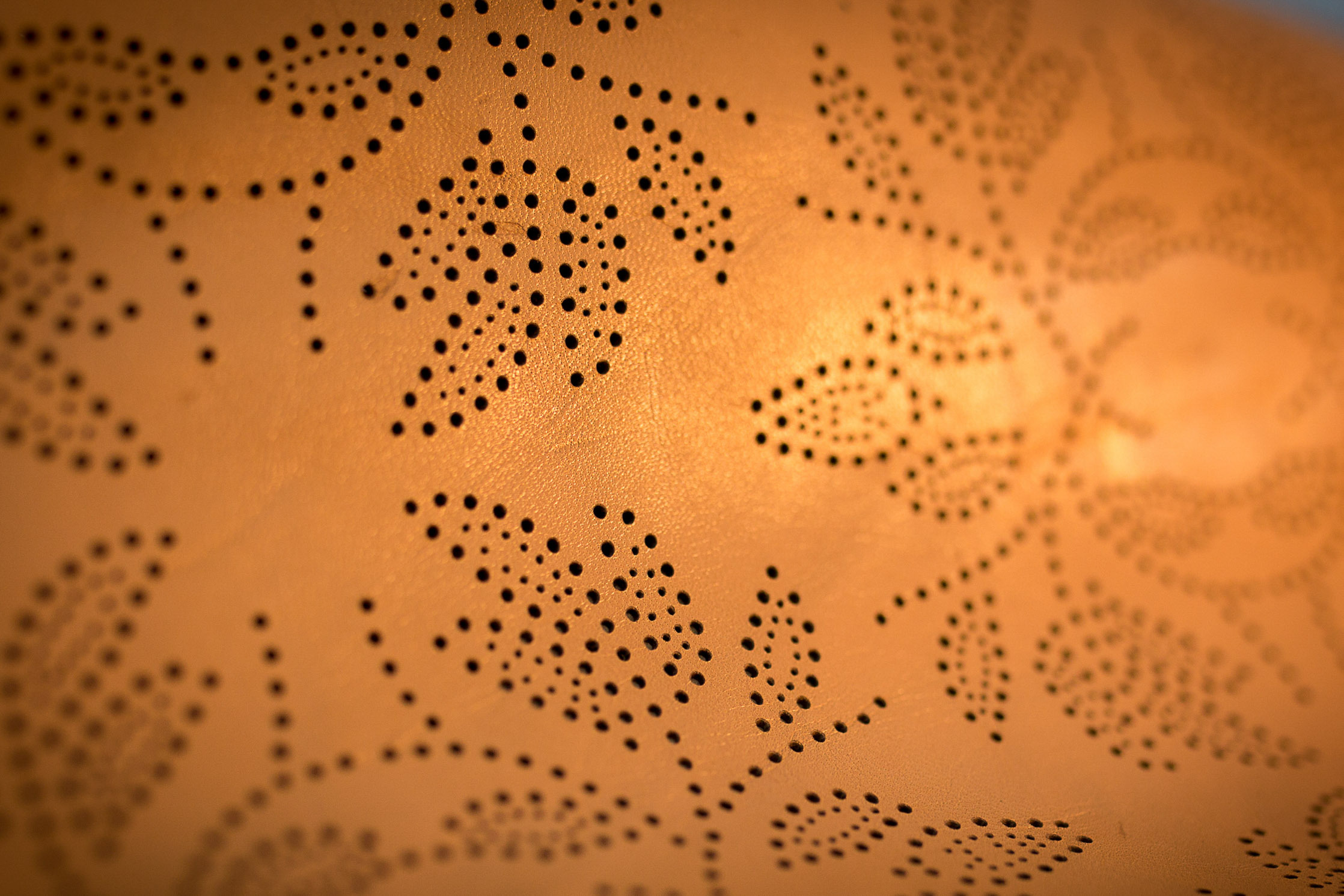
Laser microdrilling allows for holes smaller than a millimeter in diameter with uniform distribution and controlled geometry. In leather goods and accessories, this technique responds to two distinct needs: the functional one, with the creation of breathable surfaces for gloves, sports bags or linings, and the aesthetic one, with decorative patterns that play on the density and arrangement of the holes to create optical or partial transparency effects.
Unlike mechanical punching, laser microdrilling does not generate pressure on the material and does not thin it around the hole, preserving the structural strength of the artifact.
Natural and synthetic leather: same processes, different parameters
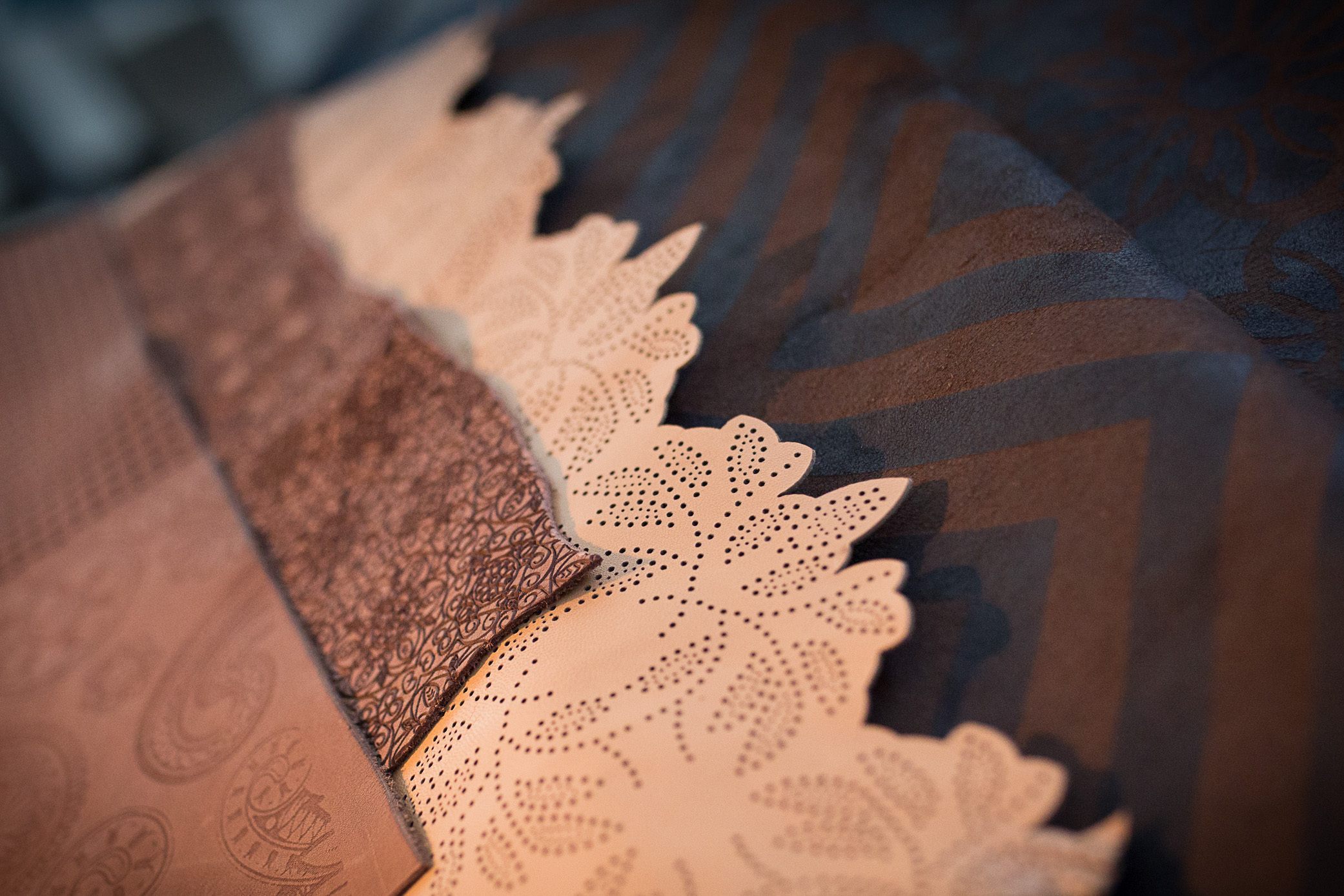
The difference between natural leather and synthetic leather concerns not only the origin of the material, but also the behavior during laser processing. Natural leathers tend to produce a burnishing effect around the engraving or cutting area: a result often sought after for vintage or handcrafted effects, but which requires careful parameter management to be uniform and controlled. Preventive surface protection is required in some cases.
Synthetic materials, such as eco suede, microfiber, or technical polymers used in contemporary fashion, respond more predictably to laser radiation, with results that are more uniform and easily replicated in series. The chemical composition of the material determines the intensity and color of the final result: it is always advisable to carry out preliminary tests on the specific material before setting up large-scale processing.
In both cases, OT-LAS’ CO₂ laser allows for precise and dynamic power regulation, offering the flexibility to adapt processing parameters to each material specificity.
Applications in the fashion and accessories sector
The laser is used throughout the production process of companies that process leather and suede, from conception to serial production. Major applications include:
- Bags and luggage: decorative engravings, embossed logos, geometric patterns, decorative microperforations.
- Footwear: leather upper cutting, surface texturing, serial customizations.
- Belts and straps: brand and size marking, adjustment holes, edge trim.
- Gloves: micro-perforation for breathability, shaped cut of complex shapes.
- Clothing: applications on leather or synthetic suede jackets, skirts and trousers, engravings, worn effects, decorations.
- Fashion accessories: wallets, card holders, keychains with series or on-demand customization.
The versatility of the CO₂ laser on these materials allows companies to respond flexibly to market demands: from one-to-one customization to high-volume production, maintaining the quality of the result constant.
Why choose laser over traditional techniques?
Rispetto a metodi come la stampa a caldo, la fustellatura meccanica o la serigrafia, il laser offre concrete advantages in terms of production efficiency:
- No tool changes: the absence of mechanical contact eliminates tool wear and replacement times.
- No ink or dye: marking is achieved through physical interaction with the material, without additional chemical substances.
- Waste reduction: laser cutting is precise and optimizable, with more efficient use of material.
- Repeatability: the same processing file guarantees identical results on every single piece, even after weeks or months.
- Design flexibility: any change to the design can be applied in a few minutes, without tooling or equipment costs.
The result is a leaner process, with contained management costs and a greater capacity to respond to production variations, a competitive advantage not to be overlooked in a sector where development times and batch sizes have progressively decreased.
A more sustainable process
Laser processing fits coherently into the sustainable production strategies that many fashion companies are adopting. The absence of solvents, inks and chemical consumables reduces the environmental impact of the process. Precision cutting minimizes material waste. And a well-maintained laser machine maintains its performance over time, ensuring a return on investment spread over years of use.
For brands that communicate values related to production responsibility, being able to count on intrinsically cleaner technology than traditional alternatives is an element that applies both operationally and reputationally.
OT-LAS machines for leather processing and accessories
OT-LAS designs and manufactures Made in Italy CO₂ laser systems for industrial applications in fashion, leather goods and accessories. Our machines are configurable according to specific machining needs: from worktop format to source power, from optical head to drawing management software. Some of the advantages of OT-LAS laser machines:
- Extraordinary precision, thanks to the ultra-high definition optical system
- Maximum versatility on natural leather, nubuck, suede and synthetic materials
- Custom configurations for every production need
- Dedicated technical assistance from the installation phase to scheduled maintenance
- Working even on large formats, with machines specifically designed for large surfaces
Want to discover the best machine for your business? Contact us for a personalized consultation.